American Healthcare Deserves New Infrastructure, Not Point Solutions
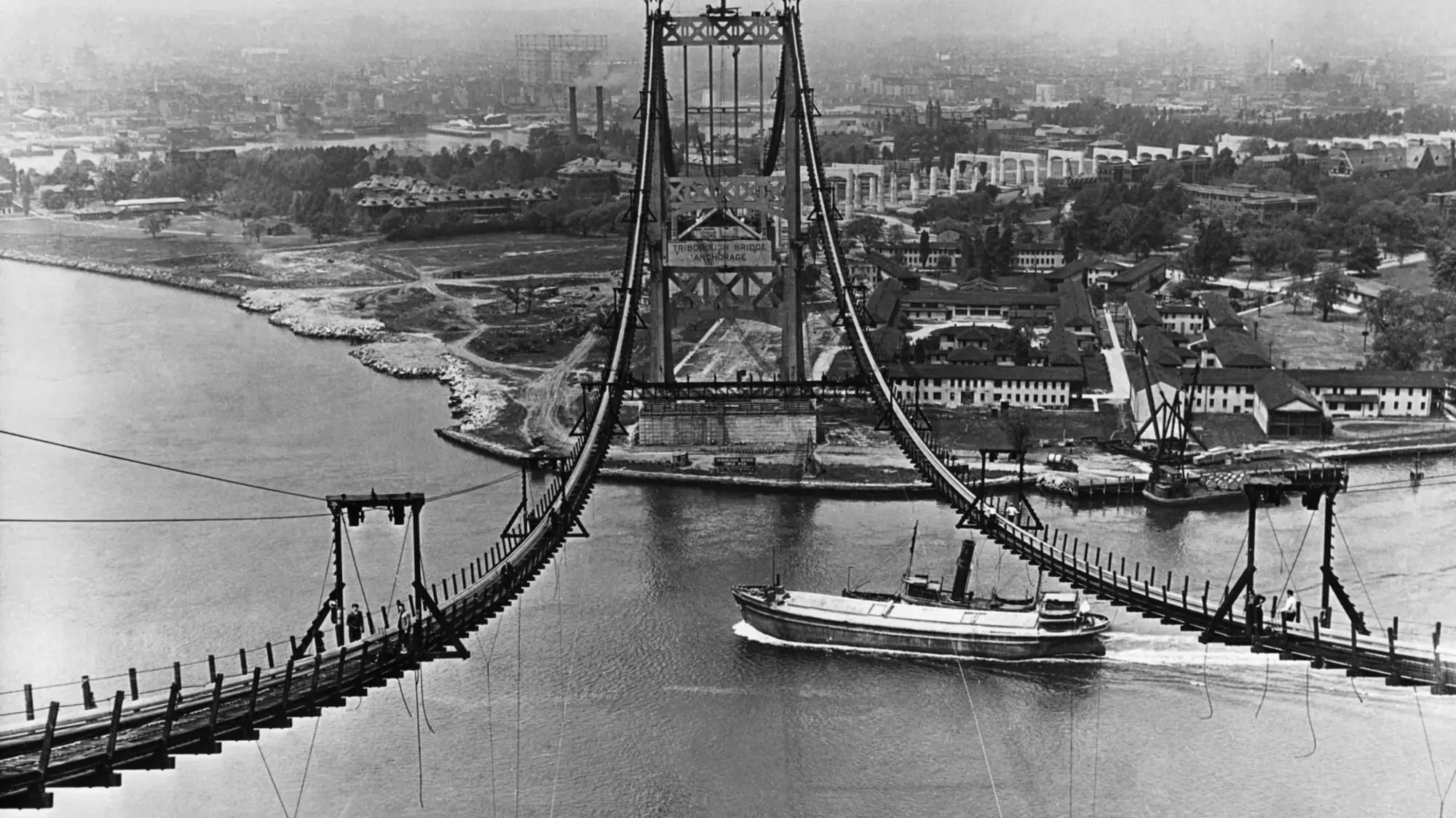
The United States has been at the forefront of building modern infrastructure. We electrified a continent. Connected it by rail, telephone, and broadband. Invented the semiconductor, the internet, and many of the technologies that define modern civilization.
In medicine, our achievements are no less extraordinary. We can sequence the human genome, engineer living cells, and train machines to recognize disease.
And yet, the supposedly wealthiest and most innovative country on Earth cannot reliably deliver care to patients when they need it most. American consumers are the greatest beneficiaries of capitalism in the world, except in the one place it matters most.
A mother spends hours on the phone trying to get care for her child. An elderly man struggles to breathe while the equipment he depends on sits behind a maze of paperwork and unanswered phone calls. A family watches their loved one spend another night in a hospital bed because a fax went unanswered.
We’d sooner bet on colonizing Mars than a reasonably functioning American healthcare system within the next fifty years.
This is the paradox of American healthcare. We have unbounded optimism for the most ambitious endeavors in the stars, but deep pessimism for critical problems that exist on the ground.
Our faith in individualism, decentralized institutions, and market-driven innovation has helped produce extraordinary medical breakthroughs. But it has also left us with a patchwork of disconnected payers, providers, and intermediaries, each running their own local optimization on their sliver of the system.
How We Got Here
In the Federalist Papers, Alexander Hamilton recognized that a loose union of self-interested states required a shared institution to ensure their collective prosperity. Following the dissolution of Hamilton's national bank, the country entered an era of financial fragmentation. State-chartered banks, private businesses, and even railroads would issue their own paper currencies. Thousands of institutions operated under different rules, with limited rails to coordinate with each other. What eventually emerged was not merely another bank, but rather an entirely new layer of financial infrastructure capable of coordinating and stabilizing this otherwise disconnected network.
While our banking system developed through this new central planning mechanism, American healthcare grew organically, as independent hospitals, private practices, and insurers gradually emerged to serve their respective communities and markets.
Healthcare data is significantly more unstructured than banking, making standardization extraordinarily difficult. In the absence of this standardization, each new institution had to develop its own rules and processes for navigating the path from medical decision to delivered care.
The workflows they developed were based on the analog world. Physicians used to hand-write prescriptions, before eventually transmitting them via fax. Over time, we serialized these systems into bits through Electronic Health Records (EHRs) and even made the quantum leap from fax to eFax. However, providers still needed to construct their own plumbing for how to convert these bits into actions. The workflows transitioned from paper to portals, but the underlying definitions were still based on the analog primitives of the past.
The Process Industrial Complex
As each provider has been left to reconstruct their own administrative machinery, an entire industry of outsourced labor farms and SaaS point solutions emerged. Instead of eliminating administrative overhead, we inadvertently created an economy centered around managing the existing fragmentation.
The perverse irony is that we now have captive loyalty to our archaic process designs, as we optimize each individual step rather than question whether any of it should even exist.
The consequences of this extend far beyond economic inefficiency. Burnout is not simply a function of how many hours we work, but of how much of that work feels meaningful. We’ve confined our providers to administrative machinery that consumes their time without leveraging their true craft.
During the COVID-19 pandemic, we conveniently coined the moniker “front-line workers” to describe medical professionals. For a brief moment, we gave them the same reverence as people who defend our country. But years later, we still reward them with the legacy of the process industrial complex.
We’ve equipped our warfighters with the most advanced technology to fight on the battlefield. And yet our providers are fighting the domestic war with fax machines and phone trees. Our front line deserves better.
The Execution Network for Healthcare
Transformative infrastructure has repeatedly turned fragmented, independently managed capabilities into shared foundations for progress. Before the electrical grid, factories generated their own power. Before cloud computing, technology companies maintained their own servers. These transformations did not merely reduce costs; they freed entire industries to focus on what they did best.
Healthcare remains in its pre-grid era and requires a new operating layer to deliver on its highest ambition to those who need it the most.
For most of modern history, replacing the legacy machinery was untenable. The information is messy, institutional requirements are very heterogeneous, and the number of exceptions is near limitless.
However, AI is uniquely effective at interpreting unstructured information, navigating bespoke systems, and reasoning through exceptions. For the first time, intelligence itself can become the connective tissue between previously incompatible institutions.
We believe administrative execution must become a utility of the American healthcare system. We envision a world where every healthcare organization can benefit from a shared intelligence that interprets intent, coordinates across institutions, and moves care from prescription to delivery. Most importantly, patients become the greatest beneficiaries of a system designed around cooperation rather than institutional self-interest.
This is what we are building at Armory.
In order to realize this vision, we must correct the fundamental mistakes of the past. We cannot merely “AI-fy” the analog process world. Workflow wizards provided productivity gains for the first generation of software, but still left behind the immense cost of human-to-human coordination.
We take responsibility for the work itself, rather than dispensing yet another tool and delegating to an operator. We redesign work from the first principles for achieving the outcome, rather than top-down definitions of the institution.
The legacy process
Armory
The power of this infrastructure compounds with every entity we connect. Each new integration expands the reach of the network. Every bespoke requirement we codify, every system we learn to navigate, and every recurring exception becomes reusable infrastructure and shared capability across participants.
An isolated point solution makes one institution more efficient. A shared execution network makes the entire system more capable. As the network expands, the burden of administrative execution can shift from individual participants onto the common infrastructure connecting them.
As AI becomes the entry point for patients into the American healthcare system, our network will provide the infrastructure to connect them with the right providers and coordinate care from intent to delivery.
While the first generation of healthcare software digitized the bureaucracy, we will consume it.
Call to Arms
This mission is neither easy nor fashionable. Building systems that can reliably navigate thousands of institutions, millions of patients, and a nearly infinite number of exceptions is an engineering and operational challenge unlike any other. The history of venture-backed healthtech startups leaves much to be desired.
Yet we also live in a time where the calculus has shifted in favor of those who can deliver on the unfulfilled promises of the past. As intelligence becomes increasingly abundant, differentiation shifts from impressive demos to delivery of reliable, verifiable outcomes.
We reject the notion that the dysfunction of American healthcare is inevitable. No incumbent is coming to rescue us from a broken system they’ve adapted to tolerate. No government is coming to deliver a New Deal for American healthcare.
Exceptional operators of this generation have a choice: you can spend your careers making inconsequential things that work marginally better or devote your talents to defining the system that hundreds of millions of Americans depend on.
America does not lack the ingenuity to invent the future of medicine. It lacks the infrastructure to deliver it.
Armory will be the defining infrastructure company of American medicine.